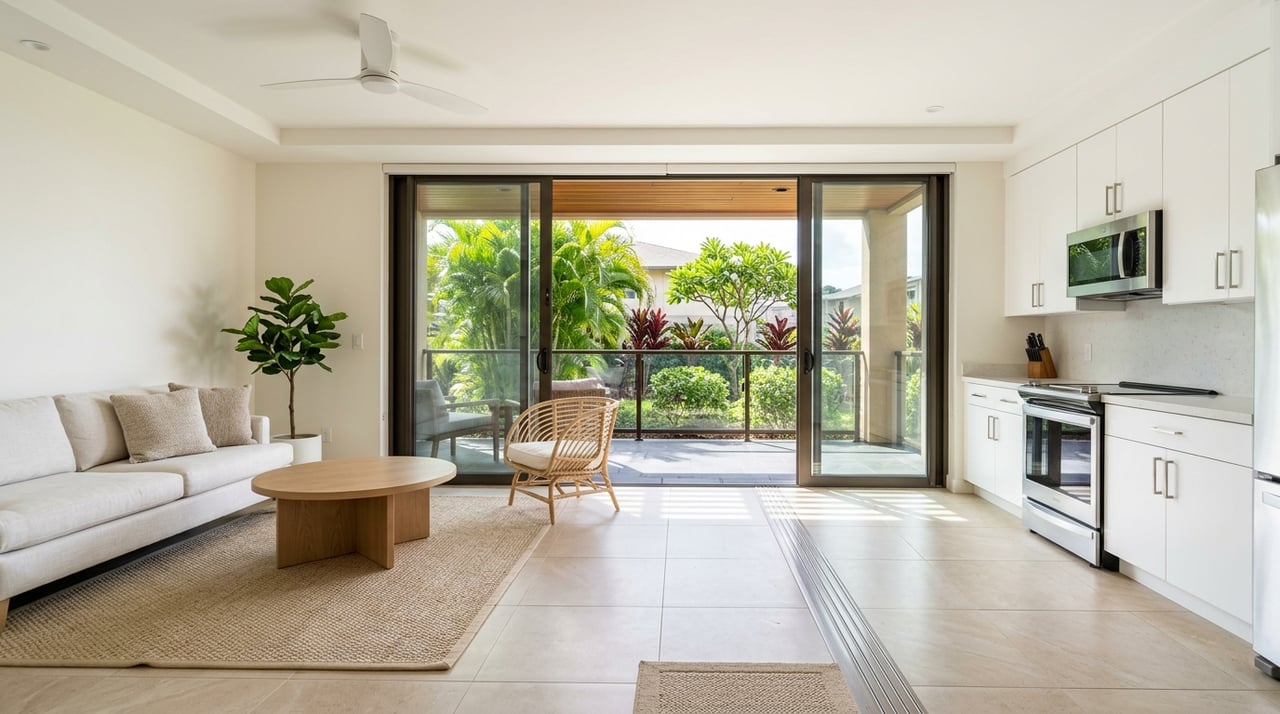
Guide to Buying a Kailua Kona Vacation Rental Condo
If you are dreaming about a Kailua-Kona condo that gives you personal island time and rental income, one question matters before anything else: can you legally use it as a vacation rental? That is where many buyers get tripped up. The good news is that with the right due diligence, you can buy more confidently, avoid costly surprises, and understand what really drives value in this market. Let’s dive in.
In Kailua-Kona, buying a vacation rental condo is not just about the ocean view, pool, or price per square foot. It is also about whether the unit is actually eligible for short-term rental use under Hawaii state rules, Hawaii County planning rules, and the condominium’s own governing documents.
In Hawaii, rentals of less than 180 consecutive days are treated as transient accommodations. Hawaii County also states that short-term vacation rental use is governed by county planning rules and zoning status, with some existing operations outside permitted districts relying on a nonconforming use certificate, also called an NUC.
That means you should not rely on marketing remarks, past guest history, or what “everyone says” about a building. A condo may have hosted guests before, but that alone does not confirm your legal right to continue that use.
Before you write an offer, confirm the specific property details tied to the unit. Hawaii County points buyers to the TMK, zoning maps, and short-term vacation rental application materials as part of the verification process.
For you as a buyer, that means checking whether the building’s short-term rental use is supported by zoning, a nonconforming use certificate, a use permit, or a special permit. If the property depends on an NUC, remember that Hawaii County notes NUC holders must renew annually.
This step is especially important for off-island buyers. From afar, two nearby condo projects can look similar, but their legal rental status can be very different.
Even if a condo is in a location where short-term rentals may be allowed, the condominium documents still matter. In Hawaii, the declaration, bylaws, and house rules control what owners can do within the project.
According to the Hawaii Real Estate Commission, these documents may address permitted and prohibited uses, board powers, fines, insurance requirements, pet rules, and other day-to-day ownership issues. In plain terms, county rules may open the door, but the condo association can still define how the property operates.
That is why one of the smartest moves you can make is to request and review the current declaration, bylaws, and house rules early. The Commission also notes that buyers should use the Bureau of Conveyances to verify the most current recorded version.
When reviewing a Kona condo for vacation rental use, focus on practical restrictions that affect your plans:
These details shape the ownership experience and can directly affect income potential, guest use, and resale appeal.
A vacation rental condo can have carrying costs that are higher than buyers expect. The Hawaii Real Estate Commission notes that condo owners are required to pay their share of common expenses whether they personally use the unit or not, and common expenses generally increase over time.
That is why a proper due diligence package should go beyond monthly HOA dues. You should also review current financial statements, board minutes, association minutes, insurance policies, management contracts, delinquency information, and any records that might reveal reserve strength or pending special assessments.
This matters because a building that looks attractive on the surface may still have financial stress behind the scenes. Deferred maintenance, low reserves, or an upcoming assessment can change the true cost of ownership very quickly.
Hawaii condominium guidance indicates that many association records are available to owners and prospective purchasers, and associations generally must provide requested records within 30 days. Key items to review include:
In Kona, one of the most important ownership questions is whether the condo is fee simple or leasehold. This is not a minor technical detail. It can affect risk, financing, resale, and your long-term plans.
Under Hawaii law, fee simple means ownership of the property for an indefinite duration. It is the form of ownership most mainland buyers expect.
Leasehold is different. With leasehold, you own the right to occupy and use the property for the lease term, but you do not own the land outright. Hawaii’s leasehold disclosure warns that lease rent can be renegotiated, that renegotiated rent may increase significantly, and that the property may need to be surrendered at the end of the lease.
Some condominium projects can also have units conveyed by deed while the underlying land remains leased. Because of that, you should confirm the exact ownership structure for the specific unit, how much lease term remains if it is leasehold, when renegotiation dates occur, and whether there is any realistic path to fee conversion.
Many buyers focus heavily on projected gross income and underestimate the tax and operating side of the equation. In Kailua-Kona, realistic underwriting starts with understanding the tax layers attached to short-term rental use.
As of January 1, 2026, Hawaii’s transient accommodations tax is 11%, and Hawaii County adds a 3% county transient accommodations tax. Together, that creates a combined 14% transient-accommodation tax before general excise tax is added.
Hawaii’s Department of Taxation also states that short-term rental operators must register for GET and TAT, file periodic GET returns, and file TA-1 and TA-2 returns. The general excise tax rate is 4% for most activities, and Hawaii County adds a 0.5% county surcharge. If the tax is visibly passed on to guests, the county’s maximum pass-on rate is 4.7120%.
Another detail buyers often miss is that gross rental proceeds include mandatory resort fees. Those fees do not sit outside the tax base.
A realistic vacation rental condo budget in Kailua-Kona usually includes:
If your annual GET or TAT liability exceeds $4,000, Hawaii requires electronic filing. For many off-island owners, that means ongoing compliance should be treated as part of the investment plan, not an afterthought.
Property tax is another major line item that can change your numbers. Hawaii County says real property is assessed at fair market value, and tax rates vary by classification.
For the fiscal year running from July 1, 2025 through June 30, 2026, Hawaii County lists apartment tax at $11.70 per $1,000 of net taxable value, hotel/resort at $11.55, and residential at $11.10 below $2 million and $13.60 at $2 million and above. The county also notes a $200 minimum real property tax.
The key takeaway is simple: verify the actual tax class for the specific condo you are considering. Two units with similar pricing can carry meaningfully different annual tax bills if they fall into different classifications.
If you are buying from the mainland or from another part of Hawaii, your process needs to be extra disciplined. It is easy to get swept up in photos, views, and projected rental numbers, but the value of a vacation rental condo depends heavily on legal use, ownership structure, and building rules.
A strong local due diligence process usually pulls from three places at once: the county planning file tied to the TMK, the recorded condominium documents, and a title or legal review of the deed or lease structure. That three-part review helps you understand what you are buying before you commit.
In Kailua-Kona, the lifestyle appeal is real. But from a buyer’s standpoint, the right to rent and the cost to operate should come first.
If you want a practical framework, keep your focus on these five questions:
When those answers are clear, you can move forward with far more confidence. And when they are not, it may be better to pause than to buy into uncertainty.
Buying a vacation rental condo in Kailua-Kona can be a rewarding way to enjoy Hawaiʻi Island while building a property strategy around personal use and income potential. The most successful purchases usually come from clear-eyed research, strong document review, and local guidance that looks beyond the brochure. If you want a refined, hands-on approach to evaluating resort and condo opportunities on Hawaiʻi Island, connect with Deborah Thompson.
Deborah derives great satisfaction from fulfilling clients' aspirations by connecting them with their ideal homes. She endeavors consistently to cater to the requirements of both buyers and sellers.

DEBORAH THOMPSON
65-1279 KAWAIHAE RD SUITE #104 KAMUELA HI 96743