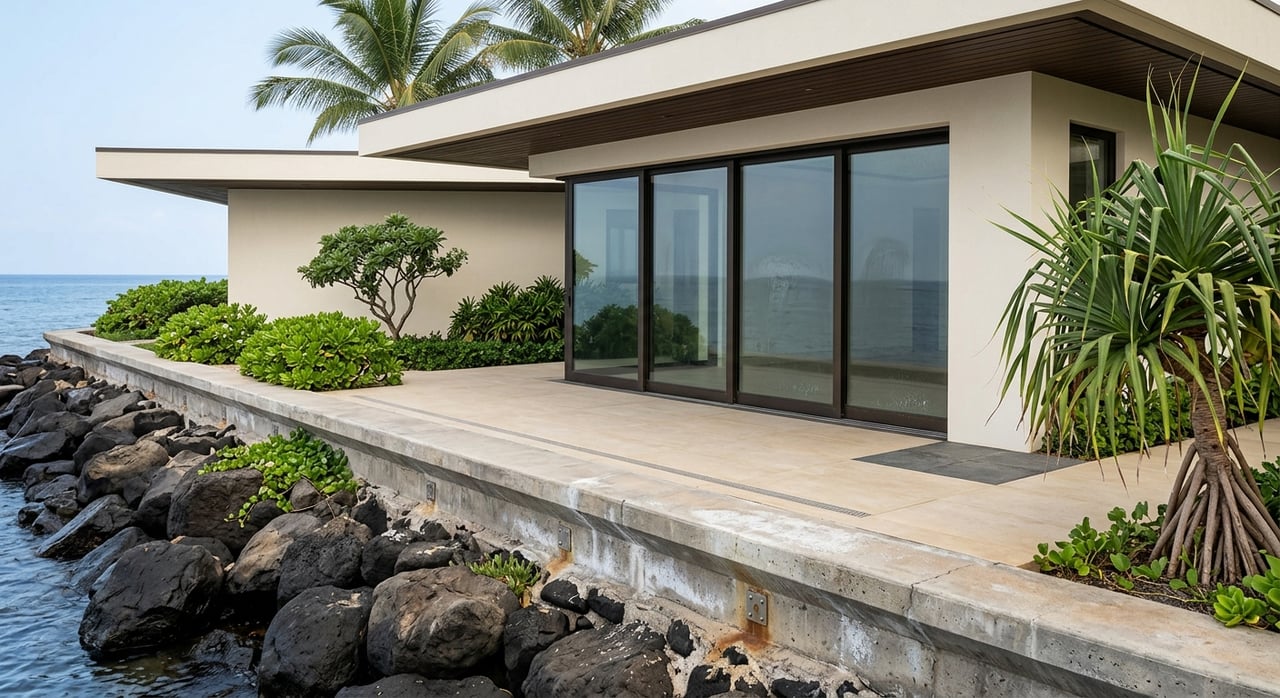
Puako Oceanfront Home Buying: Key Due Diligence Steps
Dreaming about waking up to the sound of the ocean in Puako? An oceanfront home here can be a remarkable purchase, but it also comes with questions that go far beyond views, privacy, and architecture. If you are considering buying along Puako Beach Drive, you need to understand shoreline rules, coastal hazards, insurance, access, and property-specific due diligence before you move forward. Let’s dive in.
Puako is not a large resort area with room for major expansion. According to the South Kohala Community Development Plan, it is a compact, low-density shoreline community made up mainly of single-family homes along Puako Beach Drive.
That small-scale setting is part of the appeal. It also means every oceanfront parcel deserves careful review because the community’s shoreline, access, and long-term resilience are central to ownership here.
The same county plan notes that Puako has only one paved access road and identifies disaster access as a major community issue. For you as a buyer, that makes location analysis about more than scenery. It also means thinking through access, evacuation planning, and how the lot may perform over time.
One of the biggest surprises for oceanfront buyers in Hawaiʻi is that owning shoreline property does not mean controlling the shoreline the way many buyers expect on the mainland. In Hawaiʻi, shoreline public access is a common-law right.
The Department of Land and Natural Resources states that beach transit corridors seaward of the shoreline are public property. It also says coastal landowners must keep shoreline vegetation from blocking access.
In South Kohala, the county lists twelve separate shoreline access points along Puako Beach Drive. There is also an unpaved coastal trail running from the south end of Puako Beach Lots to Pauoa Bay.
That matters for both privacy and use. If you are evaluating an oceanfront home in Puako, it is wise to walk the nearby access points and the seaward edge of the property so you can better understand how public access, terrain, and shoreline activity may affect the ownership experience.
When you tour a property, pay attention to more than the house itself. Look closely at the shoreline edge and the surrounding conditions.
Consider checking for:
County and state guidance also notes that parts of the coast in this area can involve rocks, slippery terrain, strong currents, waves, erosion, and dangerous sea cliffs. Those conditions do not define every parcel, but they are important context when you assess an oceanfront purchase.
For an oceanfront home in Puako, the certified shoreline is not a minor detail. It is the legal baseline used for shoreline setbacks and helps define the jurisdictional boundary between the State Conservation District and the County Special Management Area.
The State Land Surveyor handles shoreline certification. Hawaiʻi County notes that shoreline setbacks are usually established early in permitting, and lots that abut the shoreline have a minimum shoreline setback of 40 feet.
This can affect what exists on the lot today and what may be possible in the future. If there are additions, shoreline structures, grading, or other improvements near the coast, you want to know whether they were reviewed and permitted correctly.
A beautiful oceanfront property can still have complications hidden in the file history. If shoreline boundaries have shifted, if setback lines are unclear, or if prior work was done without proper approvals, those issues can affect value, maintenance, and future plans.
Before closing, a prudent buyer should confirm the shoreline certification, setback line, and any relevant county or state approvals. If the parcel touches tidal areas or wetlands, Hawaiʻi County also notes that additional review may apply.
Buying oceanfront in Puako means buying into a living shoreline environment. Hawaiʻi’s Climate Change Portal reports that sea level in the state has risen 5 inches since 1970, high-tide flooding days have increased sharply, and about 70% of beaches statewide are currently threatened.
State coastal hazard guidance also identifies erosion, tsunamis, hurricanes, flooding, subsidence, earthquakes, and lava flows as risks affecting Hawaiʻi’s coastline. For you, that means the value of an oceanfront parcel depends in part on how the site handles coastal change.
Healthy beaches and dunes help buffer coastal development from erosion and flooding. By contrast, unresolved erosion exposure or poorly documented shoreline work can become a long-term ownership issue.
In Puako, smart due diligence is parcel-specific. You should evaluate the land and shoreline condition with the same care you give the residence itself.
Areas worth close review include:
If a parcel already has shoreline work, confirm the permit history and any nonconforming-status documentation before you remove contingencies. State guidance makes clear that coastal uses often require permits, and paperwork history matters.
Not every oceanfront parcel will have a seawall or similar structure, but when one exists, you should treat it as a major due diligence item. State coastal hazard sources identify seawalls, groins, bulkheads, and revetments as shoreline hardening structures.
In practical terms, you want to know three things. Was the work permitted, what condition is it in today, and how might it affect future ownership costs or compliance questions?
If records are incomplete, that should prompt deeper review. A well-located home with unclear shoreline work history may carry more risk than a less dramatic parcel with clean documentation.
Oceanfront buyers often focus on price, condition, and views first. In Puako, insurance should be part of the early conversation, not a last-minute task.
According to the Hawaiʻi Department of Commerce and Consumer Affairs, flood insurance is separate from homeowners insurance and is generally not required unless the property is in a designated high-risk flood zone. The same guidance says homeowners policies do not cover flood, hurricane, or earthquake losses.
HIEMA also states that lenders in Hawaiʻi require hurricane insurance, that hurricane coverage is mainly for wind, and that flood insurance covers storm surge and other flood-related losses. For you, that means an oceanfront budget should include a realistic review of wind and flood coverage.
DLNR explains that flood maps show flood zones, floodplain boundaries, and base flood elevations. These maps are used to determine flood insurance requirements and policy premiums.
Before you move too far into a purchase, confirm the parcel’s flood zone using the Hawaii Flood Hazard Assessment Tool and related state flood-map resources. It is also wise to get insurance quotes before removing contingencies so there are no surprises later in escrow.
Wastewater may not be the most glamorous part of buying an oceanfront home, but it is one of the most important. The Hawaiʻi Department of Health says cesspools are substandard systems that can contaminate groundwater, streams, the ocean, beaches, and coral reefs.
The department also reports that all cesspools in the state must be replaced by 2050. On Hawaiʻi Island, that issue is especially relevant because the island has a large share of the state’s remaining cesspools.
For you as a buyer, this is both an environmental and financial question. You should confirm whether the property is on sewer, septic, or cesspool, and ask about any required upgrades, timing, or estimated conversion costs.
When you buy an oceanfront home in Puako, the strongest approach is a structured review of the parcel, approvals, and risk factors. This is not just about whether you love the home. It is about understanding exactly what you are buying.
Here is a practical checklist based on state and county guidance:
In a market like Puako, long-term value is about more than a rare oceanfront address. The strongest value case is usually a parcel with clean shoreline documentation, manageable erosion exposure, clear access conditions, documented permits for coastal structures, and no major surprises tied to wastewater or insurance.
On the other hand, uncertainty tends to weigh on value. Ambiguous shoreline boundaries, unresolved erosion concerns, undocumented hardening, or future coastal-risk costs can all affect your comfort level and your investment over time.
This is where local knowledge matters. In a shoreline community as specific as Puako, a polished home and a beautiful setting are only part of the story. The real confidence comes from understanding the details behind the property.
If you are considering buying an oceanfront home in Puako, working with a professional who understands Kohala Coast properties, luxury buyer expectations, and parcel-level due diligence can help you move forward with clarity. To start a thoughtful conversation about Puako and the wider Kohala Coast market, connect with Deborah Thompson.
Deborah derives great satisfaction from fulfilling clients' aspirations by connecting them with their ideal homes. She endeavors consistently to cater to the requirements of both buyers and sellers.
DEBORAH THOMPSON
65-1279 KAWAIHAE RD SUITE #104 KAMUELA HI 96743