Waimea Wet Side vs Dry Side: Find Your Best Fit
If you are trying to decide between Waimea’s wet side and dry side, you are not alone. This is one of the most common questions buyers ask because the difference can shape how a property feels, how the land performs, and what daily life looks like. The good news is that both sides offer a distinct version of Waimea living, and once you understand the tradeoffs, the choice becomes much clearer. Let’s dive in.
Waimea sits where two microclimates meet. Hawaii County planning describes South Kohala as having two distinct physical environments: a green, lush mountainous region in the north and a rugged, dry landscape in the south.
In Waimea itself, the wet side is generally the east side of town, while the dry side is the west side. This split is shaped by elevation and by northeast trade winds moving between Mauna Kea and the Kohala Mountains.
That means you can drive a short distance and notice a real change in the landscape. One area may feel greener and cooler, while another may feel sunnier and more open.
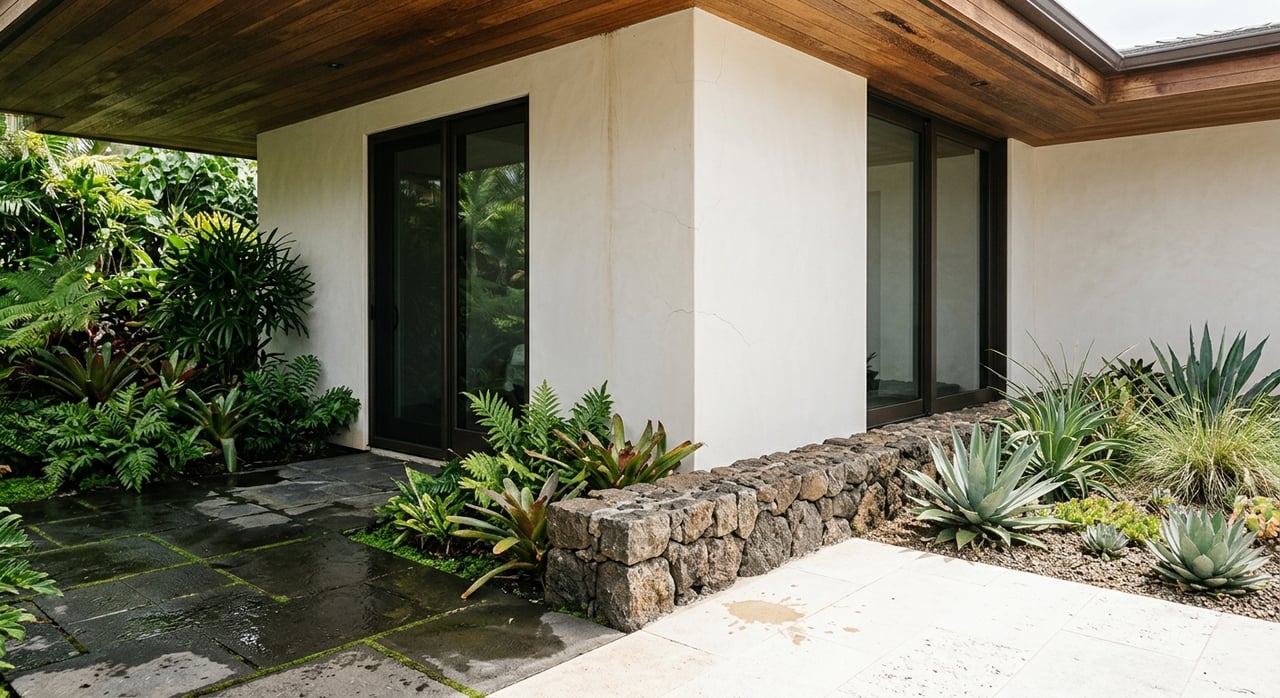
The wet side is often the shorthand for Waimea’s greener look. County planning documents describe greener pastures and forests kept lush by fog, fine mist, and rain.
If you are drawn to a classic ranch-country setting, this side may feel especially appealing. You are more likely to notice open pasture, small farm parcels, and a landscape that stays vibrant through much of the year.
East Waimea also includes visually important small farm and ranch parcels, along with some country-estate parcels with larger homes. The road into Waimea from the east is described by the county as rural in nature, with grazing horses, sheep, cattle, woodlots, and small farm fields shaping the view.
The dry side usually appeals to buyers who want less rainfall and more sun. County planning describes South Kohala’s southern areas as more rugged and dry, with greater solar radiation and evaporation at lower elevations.
In practical terms, the dry side can feel brighter and less damp. The scenery may look more open and less intensely green, which some buyers prefer for its sunny, spacious feel.
This side is not simply "better" or "worse." It is just a different expression of Waimea, and for many buyers, that difference is exactly the point.
One reason this choice matters so much is that rainfall can vary dramatically across the broader Waimea and South Kohala area. State and NOAA-cited data in the research report show that the Kamuela Upper station at 3,112 feet averages 49.5 inches of rain per year, while Puukohola Heiau near 140 feet averages 11.1 inches.
A Waimea-Kamuela climate review cited in the state environmental assessment places annual rainfall at about 30 inches, with the wettest months from November through March and the driest from May through September. That range helps explain why one property may feel noticeably greener while another feels drier, even within the same general area.
For buyers, the key takeaway is simple: the wet side versus dry side label is useful, but it does not tell the whole story. Parcel-level details still matter.
Waimea is cooler than many other Big Island locations because of its elevation. The Waimea Roadway Improvements environmental assessment places the town at about 2,675 feet, with average maximum and minimum temperatures of 72.9°F and 54.9°F.
That cooler climate is part of Waimea’s appeal. Still, the way moisture shows up in your day-to-day life can differ depending on where you buy.
On the wetter side, you may see more plant growth and more moisture around the property. On the drier side, you may enjoy more sun but may also need to think more about irrigation and drought-tolerant landscaping.
Climate often shows up most clearly in upkeep. Based on the climate and soil information in the research report, wetter lots usually require more attention to drainage, runoff, and fast-growing vegetation.
That can mean more mowing and more watchfulness around damp areas. Buyers who love a lush setting often feel the extra upkeep is worth it, but it is smart to go in with clear expectations.
On the drier side, the tradeoff often shifts. You may need more irrigation and plant choices that handle drier conditions well.
CTAHR notes that Waimea has fertile volcanic-ash soils and that vegetable production there requires irrigation. The same source also notes that wetter zones tend to have lower nutrient levels, while drier zones tend to have more abundant nutrients.
Waimea’s identity is closely tied to agriculture and open space. The South Kohala Community Development Plan describes the area as known for cattle ranching, vegetable production, and other agriculture.
It also notes that Waimea’s farm lots are important because of the area’s unique climatic conditions and irrigation system. This matters if you are comparing not just neighborhoods, but also lot types and the broader setting around a home.
Some buyers want a town lot close to daily services. Others are looking for a farm lot, ranch parcel, or country-estate setting with more land and a stronger connection to open space.
When buyers compare the wet and dry sides, they often focus first on rainfall. In reality, views, elevation, wind exposure, and lot configuration can matter just as much.
The county plan emphasizes preserving ocean views, views of the puu, and South Kohala’s Five Mountain Views. Those visual qualities are part of what makes Waimea special, and they can have a strong impact on how a property feels from day to day.
A sunnier property with broad views may compete strongly with a greener property on atmosphere alone. That is why it helps to evaluate each home beyond the wet-side or dry-side label.
County planning documents note that most residential permits issued from 2003 to 2006 were on the wet, east side of Waimea. This suggests that the wetter side has long been a focal point for residential growth.
That said, this does not prove that one side has a price premium or stronger resale today. It is simply one piece of local context that may help you understand how Waimea has developed over time.
If you are weighing long-term value, it is smarter to look at the specific property, its lot type, setting, and condition rather than assume one side always outperforms the other.
The best choice usually comes down to your lifestyle, not just the map. If you picture Waimea as green pasture, misty mornings, and a more agricultural look, the wet side may match your vision.
If you prefer a sunnier, drier setting with less rainfall, the dry side may feel like a better fit. Neither is universally better. The right answer depends on how you want to live and what type of property you want to maintain.
A useful way to compare options is to focus on these factors:
In Waimea, the wet side is the better shorthand for lush scenery and a stronger agricultural feel. The dry side is the better shorthand for more sun, drier air, and lower rainfall.
But side of town is only the starting point. Parcel-level differences in elevation, slope, irrigation, and views can matter just as much as whether a home sits east or west.
That is why local guidance is so valuable when you are buying in Waimea. A property that looks ideal online may feel very different once you understand its microclimate, land characteristics, and maintenance profile in person.
If you are considering a move in Waimea or comparing properties across Kamuela and the Kohala region, Deborah Thompson can help you evaluate each home with local insight and a personalized approach.
Deborah derives great satisfaction from fulfilling clients' aspirations by connecting them with their ideal homes. She endeavors consistently to cater to the requirements of both buyers and sellers.
DEBORAH THOMPSON
65-1279 KAWAIHAE RD SUITE #104 KAMUELA HI 96743