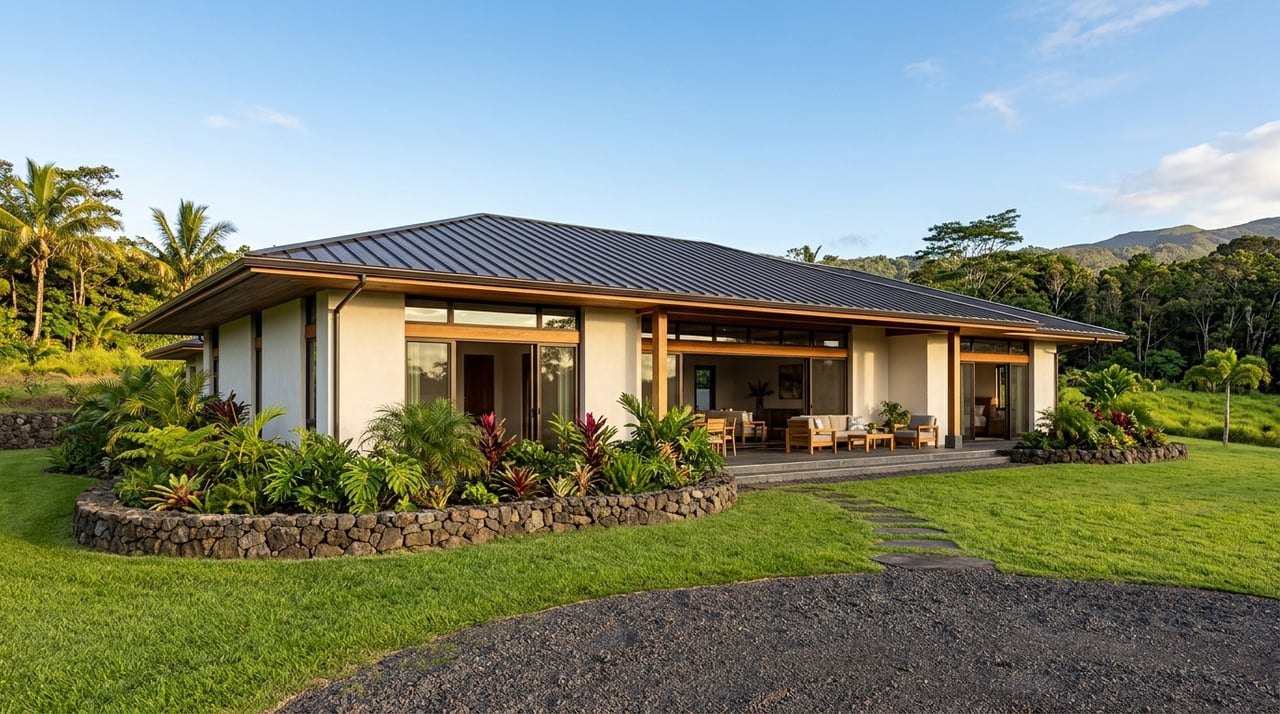
Explore Hawi North Kohala Homes for Homebuyers
Looking for a quieter side of Hawaiʻi Island? If you are drawn to open land, small-town charm, and a slower daily rhythm, North Kohala and Hāwī may be worth a closer look. This guide will help you understand what living here feels like, what kinds of homes you may find, and what practical details matter before you buy. Let’s dive in.
Hāwī sits in North Kohala, the northwest corner of Hawaiʻi Island. County planning materials describe the district as remote and isolated, with a strong small-town feel shaped by plantation and ranching history. That gives the area a very different character from the busier resort markets along the Kohala Coast.
For many buyers, that contrast is the point. If you want more space, a rural setting, and a community with a long agricultural identity, Hāwī can feel like a refreshing alternative. It offers a lifestyle that is quieter and more grounded in land, scenery, and local history.
North Kohala also reads less like one compact town and more like a group of rural villages. The 2020 Census counted 2,268 residents in Hāwī, 2,008 in nearby Kapaʻau, and 773 in Halaʻula. That scale helps set expectations if you are moving from a larger city or a more built-up resort area.
The North Kohala Community Development Plan says the community wants to preserve its rural character, agricultural base, and small-town feel. That vision still shapes how the area looks and grows today. You can see it in the open landscapes, local businesses, and the spacing between neighborhoods.
The district’s cultural identity has been shaped by subsistence farming, sugar plantation history, ranching, and small landownership patterns. For a homebuyer, that often translates into a place that feels rooted and distinctive rather than master-planned. The appeal is less about uniformity and more about authenticity.
If you are considering Hāwī, it helps to picture a day-to-day routine that is more car-dependent and more rural. You are trading quick access to major commercial areas for a quieter setting and a strong sense of place. For many buyers, that is a worthwhile exchange.
Housing in North Kohala is shaped by the district’s land-use pattern. Large areas are designated for agriculture, while relatively small areas near town centers are designated for urban density. The county’s General Plan directs future development to stay concentrated in or near those town areas.
That usually means buyers will see three broad housing types in the area.
In and around Hāwī and Kapaʻau, you may find older homes tied to the area’s plantation-era development patterns. The community plan specifically mentions plantation-era single-wall, post-and-pier houses. These homes can offer charm and a connection to the area’s historic character, though condition and updates will vary from property to property.
You may also find larger parcels where privacy, open views, and agricultural use are part of the appeal. These properties often attract buyers who want more land and a more secluded feel. In this part of the island, the land itself can be a major part of the value.
North Kohala also includes higher-end estate areas such as Kohala Ranch and Maliu Ridge, which the community plan identifies as upscale areas. These properties can appeal to buyers looking for larger homesites and broader view corridors. If you want a more elevated price point with room to spread out, these areas may come into your search.
In North Kohala, buying a home is not only about the house itself. It is also about understanding how the land is classified and what that means for future use. Hawaiʻi County notes that land use is layered, with state land use classification, county zoning, and subdivision rules all playing a role.
Zoning districts define things like permitted uses, setbacks, and height limits. In a market with many agricultural and rural parcels, those details can affect what you can build, add, or change later. That is especially important if you are thinking beyond a simple move-in purchase.
The North Kohala planning documents also emphasize that agricultural lands should remain large enough to support viable farming units. So if you are looking at acreage, it is smart to view the parcel not just as scenery, but as land with a planning purpose behind it.
One practical issue for buyers is whether a parcel may allow an additional unit or dwelling. The community plan says ʻohana units are generally permitted in residential or rural districts, but not in agriculture districts. It also says additional farm dwellings are generally allowed in agricultural zoning.
That distinction can matter a lot if you are buying with long-term flexibility in mind. You may be thinking about multigenerational living, guest space, or a property that supports agricultural use. In Hāwī and North Kohala, those possibilities depend heavily on the parcel’s specific zoning and land-use framework.
North Kohala has a compact local service base. In nearby Kapaʻau, Kohala Elementary, Kohala Middle, and Kohala High are all located on Akoni Pule Highway. The North Kohala Public Library is also in Kapaʻau at 54-3645 Akoni Pule Highway and opened in 2010 as a 6,000-square-foot LEED Gold building.
For buyers, that means many everyday needs are handled locally, but on a smaller scale than in larger parts of the island. You should expect convenience in some areas and more driving in others. That rhythm is part of what defines the lifestyle here.
The community plan also notes that schools and healthcare facilities are among the public services that could benefit from long-range improvement planning. It further states that roads, water systems, electric lines, and emergency facilities are aging in places. For homebuyers, this is less about alarm and more about awareness.
If you enjoy scenic outdoor spaces, North Kohala offers a rugged and memorable coastline. The county’s shoreline access inventory lists places such as Pololū Valley Trail, Keokea Beach Park, Kapaʻa Beach Park, Mahukona Harbor, Mahukona Beach Park, and Lapakahi State Historical Park. These are some of the area’s standout recreational and sightseeing locations.
At the same time, the county warns that many coastal areas have hazardous footing, strong currents, and waves, and that some spots are not safe for swimming. That is an important point for buyers coming from resort markets where shoreline access may feel easier or more amenity-driven. North Kohala’s coast is beautiful, but it tends to be better suited for hiking, scenic visits, fishing, and low-key beach access than easy, resort-style swimming.
Hāwī is connected, but it is not especially close to the island’s larger service and resort centers. Planning estimates based on drive times place Hāwī about 23 miles and roughly 45 minutes from Waimea. From Waimea, it is about 32 minutes to Waikoloa Beach Drive and about 30 minutes to Hāpuna Beach.
Taken together, that puts Hāwī roughly 75 to 80 minutes by car from the Kohala Coast resort belt, depending on your exact destination and traffic. If you are used to having major dining, shopping, or resort services nearby, this is an important lifestyle consideration. Daily life here usually involves more planning and more time on the road.
The North Kohala Community Development Plan also highlights emergency access issues, including the need for bypass routes around Hāwī and Kapaʻau if Akoni Pule Highway is closed. For buyers, this reinforces a simple but important reality. In a rural area like this, road access and backup routes matter.
Hāwī can be a strong fit if you want a quieter pace, a rural setting, and a home search that may include village houses, acreage, or estate-style properties. It can also appeal to buyers who value scenery, privacy, and a part of Hawaiʻi Island with a strong agricultural and cultural identity. Compared with the resort belt, the experience here is more about land and lifestyle than convenience and amenities.
At the same time, buying in North Kohala calls for careful review of zoning, access, and property infrastructure. Longer drives, aging systems in some areas, and land-use limitations are all part of the picture. When you understand those factors upfront, you can make a more confident decision.
If you are exploring North Kohala alongside Waimea, the Kohala Coast, or other parts of Hawaiʻi Island, it helps to compare not just prices and views, but how you want to live day to day. The right fit often comes down to rhythm, routine, and your long-term goals.
If you are considering a purchase in Hāwī or anywhere across North Hawaiʻi, working with a local advisor can help you narrow the options and evaluate the details that matter most. For personalized guidance on Hawaiʻi Island homes, connect with Deborah Thompson.
Deborah derives great satisfaction from fulfilling clients' aspirations by connecting them with their ideal homes. She endeavors consistently to cater to the requirements of both buyers and sellers.
DEBORAH THOMPSON
65-1279 KAWAIHAE RD SUITE #104 KAMUELA HI 96743