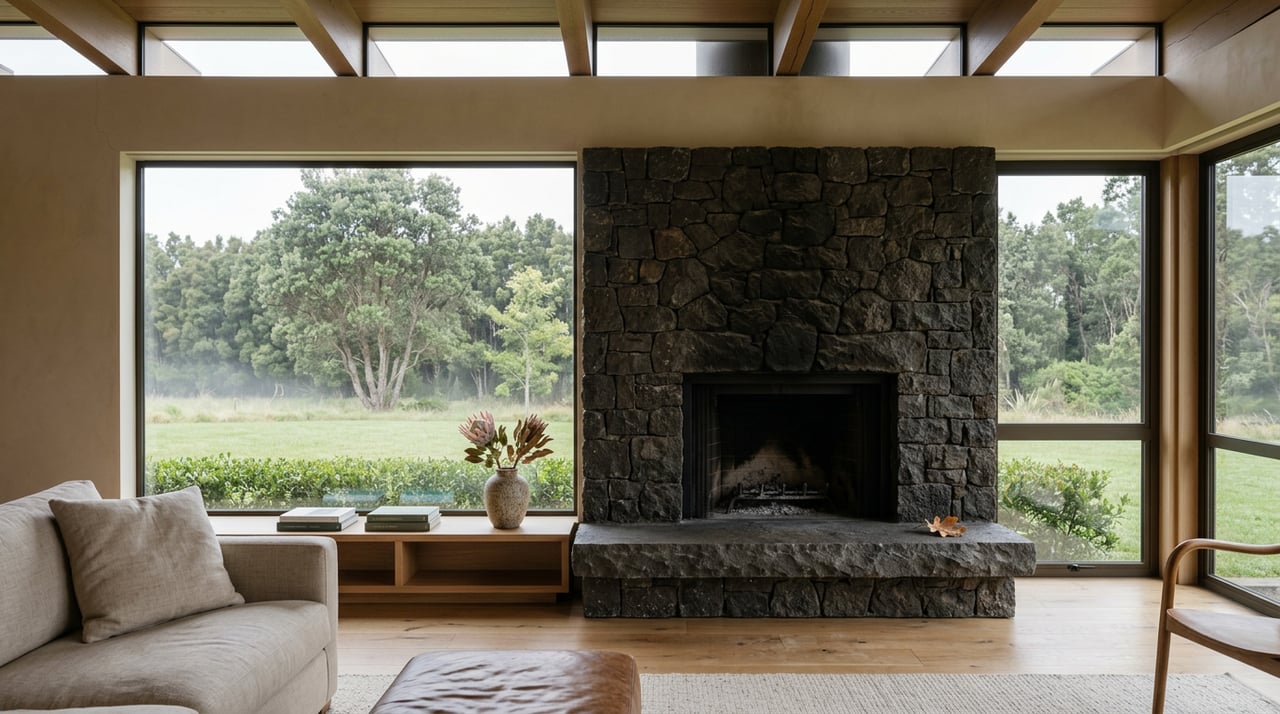
Waimea Home Prices vs. South Kohala Averages
A buyer comparing homes on Hawai'i Island's west side will eventually run into the same number: South Kohala's average home sale price landed around $1.99 million in 2026, up 12 percent year over year, with total sales volume up 25 percent and the count of $1 million-plus sales climbing 17 percent. It reads like a single, coherent market. It is not.
South Kohala is the MLS district that covers Waimea, Waikoloa, Mauna Lani, and the resort corridor running along the Kohala Coast. Fold a ranching town into the same reporting boundary as an oceanfront resort strip and the average will always describe neither place accurately. A buyer who anchors a Waimea search to that $1.99 million figure is pricing against a market they are not actually shopping in.
Waimea, officially Kamuela, sits at elevation in the interior of South Kohala, several miles up from the coastline. For most of its history the town grew around ranching, not resort development. The people, the homes, and the local economy were built around the Parker Ranch cattle operation long before Mauna Lani or Mauna Kea existed as destinations. The coastal resort communities are a much newer layer, built out over recent decades on the same stretch of shoreline that Waimea's ranch families never occupied.
That history is the actual mechanism behind the price split, not some quirk of MLS bookkeeping. Waimea sells a working town: in-town cottages, ranch-adjacent acreage, cooler-climate lifestyle. The coast sells oceanfront resort product to buyers paying for beach access, golf, and a global brand name on the listing. Average the two together and you get a number that describes a market nobody is actually buying into.
Here is where it gets more interesting than a simple coastal-versus-inland split. Even data services tracking the exact same South Kohala boundary do not agree with each other. One 2026 mid-year market analysis reported the district's average sale price at $1.99 million. A separate comps analysis covering the trailing twelve months through April 17, 2026, counted 97 South Kohala sales averaging $1,471,561.
Two data sources covering the same district landed roughly half a million dollars apart on the average sale price. The gap is not a typo. It reflects which properties, which months, and which sale types got folded into the count.
That half-million-dollar spread should tell a Waimea buyer something useful: the district-wide average is not stable enough to budget against. It moves depending on the measurement window and which transactions get swept in. If two professional analyses of the identical geography cannot agree within half a million dollars, the number was never precise enough to represent a specific Waimea purchase in the first place.
Inside Waimea, the range is just as wide as the gap between Waimea and the coast. The town is not one product either. It is at least three distinct sub-markets, each with a different buyer in mind.
| Neighborhood | Lot size and zoning | Typical buyer |
|---|---|---|
| Waimea Homesteads | 5,400 sq ft to 2.5 acres, mixed agricultural and residential, built 1940s to present | In-town buyers wanting walkable access to shops, schools, and Kahilu Theatre |
| Sandalwood at Waimea | 1 to 1.5 acres, agricultural zoning, built 1994, two seasonal streams cross the subdivision | Buyers wanting acreage and privacy without leaving town |
| Waikii Ranch | 10 to 53 acres, gated equestrian community with a polo field, riding arena, clubhouse, and tennis courts | Buyers seeking a working or hobby ranch lifestyle at elevation |
Entry-level Waimea homes still trade in the $400,000s. Waikii Ranch, at the other end, is a different category of purchase entirely. A recent snapshot of that community's luxury listings showed five active homes with a median listing price around $1.29 million and a median 119 days on market, a much slower pace than a coastal resort condo typically sees.
That slower pace is not an accident of one snapshot. Across Waimea, well-priced and well-presented homes have been moving, sometimes quickly, but inventory has climbed roughly 15 percent compared to Q1 2025, days on market are lengthening, and price reductions are showing up more often. Buyers are being more disciplined about paying for a listing that does not clearly justify its asking price.
Financing sets the tone for that discipline. Statewide mortgage rates were hovering around 6.36 percent as of mid-May 2026, according to Freddie Mac. At that rate, a buyer weighing a $1.29 million Waikii Ranch estate against a coastal condo is not just comparing square footage and view. They are comparing two entirely different holding costs, two different buyer pools competing for each type of property, and two different timelines for a sale to close.
Before treating any Waimea and coastal listing as apples to apples, confirm the lava hazard zone on each specific parcel. Hawai'i Island is divided into lava hazard zones numbered 1 through 9, and zones 1 and 2 carry the highest risk, sometimes to the point of being very difficult or impossible to insure. That designation is assigned parcel by parcel, not by neighborhood name, so a property a few hundred yards from another can carry a different zone and a different insurability picture. It is a five-minute check that can change what a mortgage lender will actually approve, and it belongs in the conversation before price does.
The district-wide South Kohala average is a real number, but it was never built to answer the question a Waimea buyer is actually asking, which is what a specific type of property in a specific part of town will cost this year. Ask any agent quoting a regional average which properties are inside that count. Ask whether the comparison set includes coastal resort sales at all. And build a search around Waimea's own sub-markets, whether that is an in-town Homesteads lot, acreage at Sandalwood, or a gated estate at Waikii Ranch, rather than a number that was calculated for a much larger, much less specific piece of geography.
Is Waimea considered part of the Kohala Coast? No. Waimea sits inland at elevation and is reported within the South Kohala MLS district alongside the coastal resort communities of Waikoloa, Mauna Lani, and Mauna Kea, but it is a distinct town with its own housing stock, history, and price range.
Why do two 2026 market reports show different average prices for the same region? The reports covered different time windows and likely counted different transaction sets. One mid-year 2026 analysis put the South Kohala average near $1.99 million, while a trailing twelve-month comps analysis through mid-April 2026 put it near $1.47 million across 97 sales. Both can be accurate for their specific measurement period while disagreeing with each other in the aggregate.
Does a lower average in Waimea mean it's a bargain compared to the coast? Not necessarily. Waimea and the coast sell fundamentally different products, an inland ranch-country lifestyle versus oceanfront resort access, to different buyers with different priorities. The right comparison is within the type of property you actually want, not across the entire price range of two unrelated markets.
Working through which Waimea sub-market actually fits your search, and how it compares to what a similar budget buys along the coast, is exactly the kind of local read that a single averaged headline can't give you. If you'd like a clearer picture of what's currently available and how it's priced, Deborah Thompson would be glad to walk through it with you. Let's Connect.
This article is general information, not legal, tax or financial advice. Consult a qualified professional about your situation.
Deborah derives great satisfaction from fulfilling clients' aspirations by connecting them with their ideal homes. She endeavors consistently to cater to the requirements of both buyers and sellers.
DEBORAH THOMPSON
65-1279 KAWAIHAE RD SUITE #104 KAMUELA HI 96743